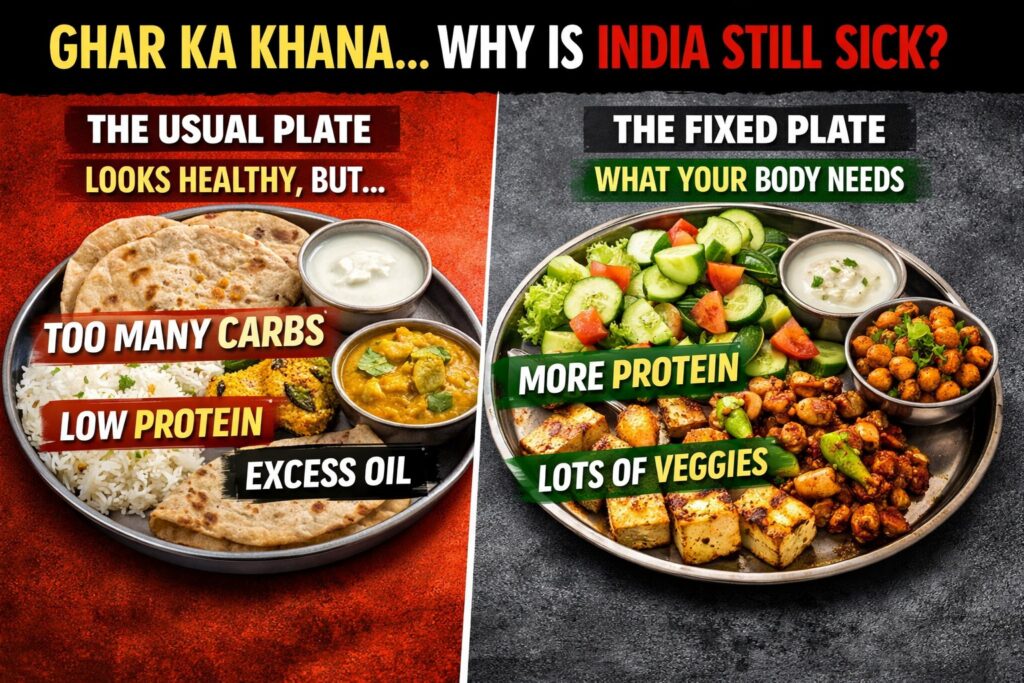

For decades, Indian doctors have been advising to avoid outside food and start consuming more home-cooked meals. It is also repeated by our elders, parents and public health messaging across India. Even when India relies on home-cooked food, it is witnessing an unprecedented rise in lifestyle diseases, forcing a closer look at what we are consuming from our kitchens.
As per the ICMR_INDIAB study covered in one of the reports by The Indian Express, India today has over 101 million people living with diabetes, with another 136 million in the pre-diabetic stage. The same study also highlights that 35.5% of the population has hypertension, and 39.5% suffers from abdominal obesity (The Indian Express).
These conditions are closely linked to type 2 diabetes, non-alcoholic fatty liver disease, and visceral fat. What makes this trend concerning is that it is not driven by fast food consumption, but by daily dietary patterns.
Indian food plates are heavily skewed toward carbohydrates. The plate is always full of roti and rice. Around 62% of total daily calories in India come from carbohydrates (OC Academy), diets are often low in protein and high in refined carbs like white rice and processed grains (PubMed). The imbalance is a key driver of insulin resistance, obesity and metabolic dysfunction.
As per a report by The Times of India, a recent large-scale analysis of over 18,000 individuals found that people consuming the highest levels of carbohydrates had significantly higher odds of diabetes and obesity (The Times of India).
The typical Indian meal, roti or rice (sometimes both), dal, and sabzi—appears balanced but often lacks adequate protein and fiber diversity.
In many cases, carbs dominate the plate; protein portions are insufficient, and vegetables are limited or overcooked, which leads to frequent hunger, repeated blood sugar spikes, and long-term metabolic strain.
The modern Indian kitchen has also seen increased use of refined oils, higher oil quantities, and dependence on polished grains. Studies highlight that Indian diets today include low-quality carbohydrates and higher unhealthy fat intake, further increasing metabolic risk (PubMed).
While traditionally, Indian lifestyles were supported by physically active routines, modern lifestyles involve long sitting hours, and minimal physical activity. At the same time, eating frequency has increased, keeping the body in constant energy-storage mode. This combination accelerates fat accumulation and metabolic imbalance.
Traditionally, when it comes to our plate, our elders have advised us to divide the proportion of the meal in such a manner that the vegetables in the plate should be twice the carbohydrates, and an equal amount of protein (most of the cases it’s dal) should match the amount of roti or rice, i.e. carbohydrates. The modern-day nutritionist also suggest the same. However, we fail to adhere to the advice.
The current investigation and study suggest that the problem is not home-cooked food itself, but how it has evolved. Higher reliance on refined ingredients, excess carbohydrate consumption, inadequate protein intake, increased portion sizes, and sedentary lifestyles.
India’s growing lifestyle disease burden is not because of eating outside food. It is more about everyday eating habits within our homes. The idea of “ghar ka khana” as healthy may need to be re-evaluated considering changing diets, lifestyles, and nutritional understanding.
Disclaimer: This article is based on publicly available research reports, studies, and data insights. It is not written by a certified nutritionist or medical professional. Any dietary or lifestyle changes should be made in consultation with a qualified doctor, nutritionist, or healthcare expert, especially if you have existing health conditions.