
By Ms. Sonam Garg Sharma, Founder and CEO, Medical Linkers
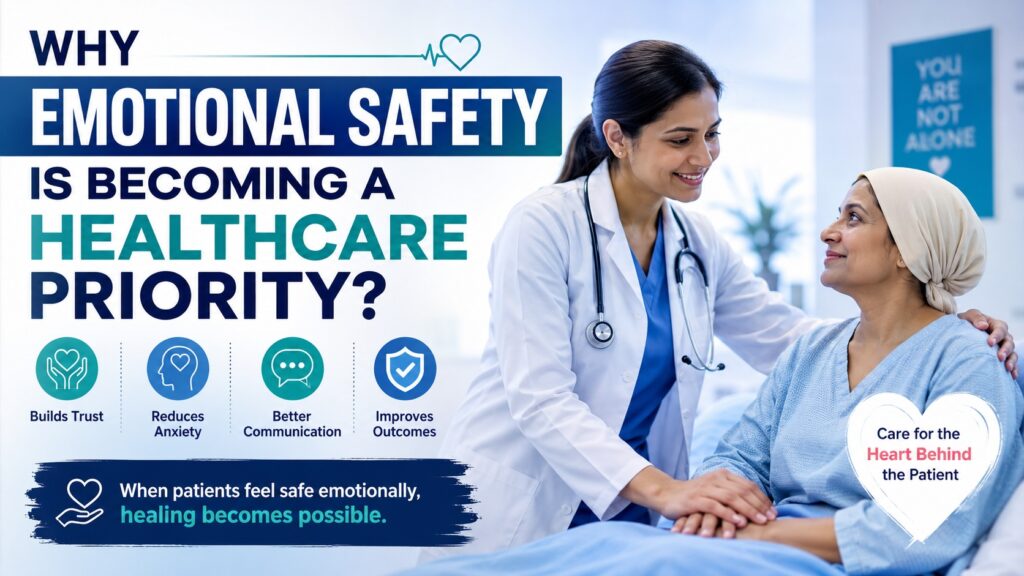
Healthcare has long been associated with diagnosis, treatment, and physical recovery. However, emotional safety has become a healthcare priority because modern medicine has realized that treatment outcomes depend not only on clinical accuracy but also on how patients feel throughout their care journey.
Studies show that nearly 40-80% of medical information provided by doctors is forgotten immediately by patients, mainly due to stress and anxiety during consultations. This highlights a critical gap in healthcare understanding and is exactly why emotional safety and clear communication are essential, so patients can process information with confidence rather than confusion or fear.
Modern healthcare realizes that there is a close interconnection between emotional stability and physical health. Patients’ feelings of fear, insecurity, or distress have a direct effect on the healing process, decision-making, and compliance. As such, it has made emotional safety more than an additional layer of care and a key element of modern healthcare practices. Another thing that makes emotional safety even more important is the prevalence of trauma-informed care. According to this principle, patients often have past traumatic experiences in the form of negative experiences related to medicine and healthcare. Therefore, emotional safety means that a person receives care in a comfortable, secure, and physical setting.
Emotional safety is built through everyday interactions, clear communication, validation of patient emotions, age-appropriate explanations, and ensuring patients feel a sense of control. These practices reduce fear and create a more supportive care environment, especially in high-stress medical situations.
The Changing Nature of Healthcare Experiences:
Today’s healthcare systems are more complex than ever. Patients often navigate multiple opinions, medical jargon, financial concerns, and unfamiliar hospital environments. In such situations, emotional strain can become as challenging as the physical condition itself.
This is why the concept of emotional safety is being recognized as an absolute necessity. When a patient feels emotionally safe, he or she will be able to share information about their symptoms, comprehend the plan of action, and be involved in the entire recovery process. Conversely, if there is any emotional insecurity on the part of the patient, there may be instances of reluctance or refusal to proceed with care.
There is also a growing awareness of trauma-informed care, which has also gained importance, wherein past medical encounters, fear of treatment, and concerns regarding diagnosis are addressed and not ignored.
Communication as the Foundation of Emotional Safety:
A major part of emotional safety lies in how healthcare professionals communicate. Small but consistent actions like listening without interruption, explaining procedures in simple language, and allowing patients to ask questions can significantly improve the care experience.
Respect and dignity also play a crucial role. Patients are not just medical cases; they are individuals dealing with uncertainty, family responsibilities, and emotional stress. When healthcare providers recognize this human aspect, it strengthens trust and improves cooperation between patients and medical teams.
Emotional Safety in Accessing Care:
Emotional safety becomes even more critical in medical travel and cross-border healthcare, where patients often deal with unfamiliar systems, language barriers, and uncertainty about quality of care. In such situations, emotional reassurance becomes as important as clinical expertise.
This is where healthcare platforms become relevant in a broader sense. Built with the idea of simplifying access to healthcare, such systems help patients connect with the right doctors and hospitals while reducing confusion and stress during decision-making. For someone already dealing with a health concern, having clarity and guided support can significantly reduce emotional pressure.
These platforms reflect a wider shift in healthcare where the focus is not only on access to treatment but also on easing the emotional burden that comes with it. By bridging the gap between patients and trusted medical professionals, they help create a smoother, more guided, and emotionally stable healthcare journey.
The Growing Importance of Patient-Centered Care:
The healthcare system is slowly moving away from just a clinical model to becoming more patient-oriented. This implies that, apart from the medical urgency, the well-being of the patient, emotionally and intellectually, is considered when making decisions.
The hospitals and healthcare facilitators are working hard to create an environment where the patient can feel safe and express their concerns, ask questions, and make decisions accordingly. This change is also influencing how doctors are trained; empathy, communication, and emotional awareness are becoming just as important as technical expertise.
Emotional safety is no longer an abstract idea; it is becoming a measurable part of healthcare quality. It influences patient satisfaction, treatment adherence, and overall recovery outcomes.